

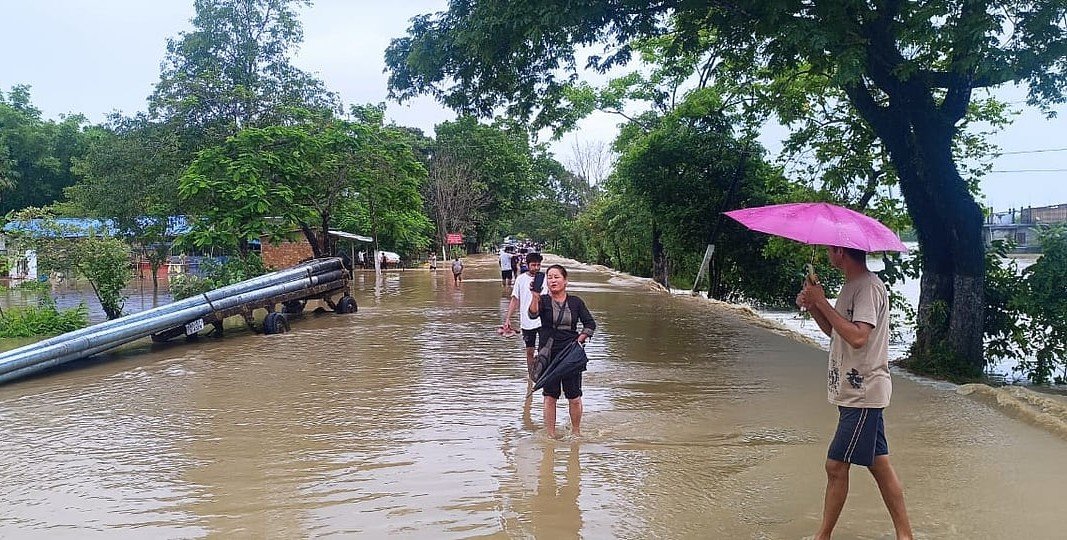
A flood alert has been issued across vulnerable areas of Assam and West Bengal following a reported Glacial Lake Outburst Flood (GLOF) in Bhutan. Authorities are closely monitoring river levels and have urged people living near vulnerable riverbanks to remain alert and follow safety instructions.
Bhutan Glacial Lake Outburst Triggers Flood Concerns
A reported Glacial Lake Outburst Flood (GLOF) in Bhutan’s Himalayan region has raised concerns about possible flooding in parts of northeastern India, particularly Assam and northern West Bengal.
The incident has triggered concerns over a sudden increase in water levels in rivers flowing from Bhutan into India. The Sankosh River, which flows through the region, is among the major waterways being monitored by authorities.
According to reports, the Central Water Commission (CWC) issued a special flood advisory on October 29, warning about the possibility of a sudden rise in water levels downstream following the reported outburst.
Which Districts Are at Risk?
Authorities are monitoring several vulnerable districts across Assam and West Bengal.
In Assam, Dhubri is among the key districts identified in the Central Water Commission’s advisory. Other districts, including Kokrajhar, Baksa and Chirang, are also being monitored amid concerns about possible flooding and riverbank erosion.
In West Bengal, Alipurduar has been identified as a vulnerable area, while Cooch Behar, Jalpaiguri and other parts of North Bengal are also under close observation.
The situation is particularly concerning for communities living near the Sankosh River and its connected waterways, where a sudden increase in water levels could create difficulties for residents.
Authorities Strengthen Emergency Preparedness
Disaster management authorities in both states have stepped up monitoring and emergency preparedness.
In Assam, the district administration and State Disaster Response Force (SDRF) teams are prepared to respond to any possible emergency. The Assam government has also stated that the situation is being closely monitored.
In West Bengal, emergency response teams have been activated, with evacuation and precautionary arrangements initiated in vulnerable areas. Residents living close to riverbanks have been advised to move to safer locations wherever instructed by local authorities.
The Central Water Commission has also advised officials to monitor river conditions and take necessary precautionary measures.
What Is a Glacial Lake Outburst Flood (GLOF)?
A Glacial Lake Outburst Flood, commonly known as GLOF, occurs when water stored in a glacial lake is suddenly released due to the failure or breach of its natural barrier.
These floods can carry enormous volumes of water, rocks, mud and other debris downstream. As a result, they can cause sudden flooding, damage roads and bridges, affect agricultural land and threaten communities located near rivers.
The risk of such events has become an important concern in Himalayan regions, where changing temperatures and glacier-related environmental changes can affect the stability of glacial lakes.
Safety Advisory for Residents
People living in vulnerable areas of Assam and West Bengal should remain alert and follow official instructions.
Some important precautions include:
- Avoid visiting riverbanks, riverbeds and low-lying areas during the alert.
- Follow evacuation instructions issued by local authorities.
- Keep essential medicines, drinking water and important documents ready.
- Stay updated through official government and disaster management announcements.
- Avoid spreading unverified information or rumours on social media.
- Move to higher and safer locations if instructed by emergency officials.
Situation Under Close Monitoring
The flood situation in parts of Assam and West Bengal remains a matter of concern following the reported Bhutan glacial lake outburst.
Authorities are monitoring river levels and coordinating emergency preparedness measures to reduce the risk to vulnerable communities.
Residents are advised to remain cautious without panicking and follow updates from official disaster management authorities as the situation develops.