


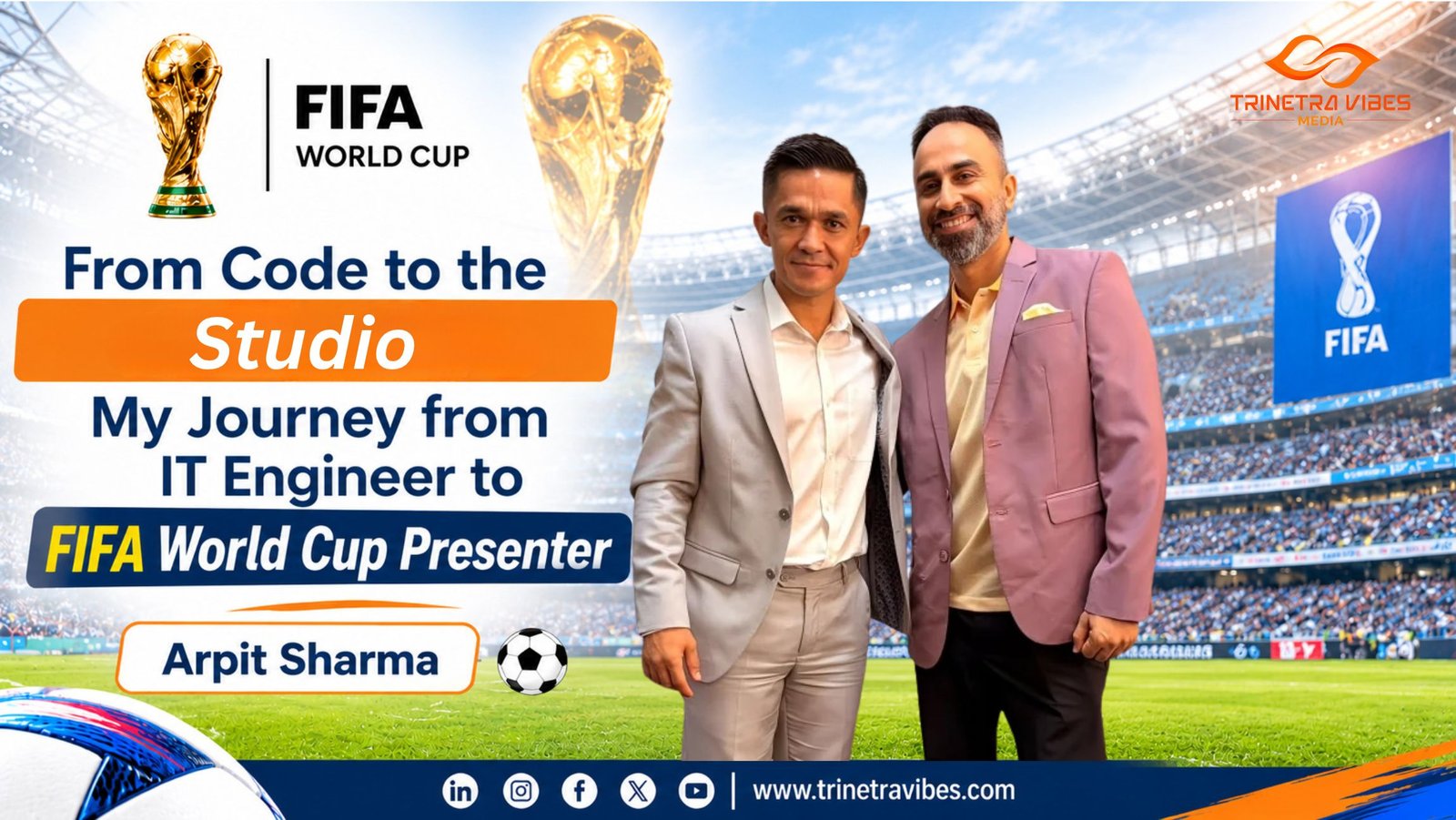
Arpit Sharma, Sports Presenter, Actor & Emcee
People often come up to me and say, “I want to do what you do. Tell me how.” The honest answer is that there is no two-minute version of my story. I didn’t come from a journalism school or a newsroom. Before I presented the FIFA World Cup, I was an electronics engineer working in IT in Mumbai.
I had a first-class degree and a campus placement – everything that was supposed to add up to a secure life. But four years into that career, I was restless and low, doing the work only because I had been told that’s what you do.
So I asked myself a question that changed everything: what if the things I had loved since childhood – sport, the stage, performing for people – could be my career, not just my hobby?
A Childhood of Books and Ball
 I grew up in Mumbai, and my mother was a teacher – for a while at my own school, and my teacher too. I like to joke that when your mom teaches at your school, she gets your report card before you do. So being a bad student was never really an option. I was usually in the top three of my class, and in Class 12 I topped my school and came fifth in the CBSE Mumbai region.
But I was also a restless kid, and I gave my parents a hard time. I played every sport I could get my hands on, acted in plays, danced and sang in the choir. My parents encouraged all of it. Cricket was my religion until college; football found me there, when the Premier League and European football started showing up on Indian TV. I played as a striker, and Ruud van Nistelrooy was my idol.
Still, the message back then was clear: play now, but sport won’t make a career – get a degree and get a job. So, I did. My marks got me a free seat in Electronics and Telecommunication engineering. I graduated with a first class, got placed on campus, and started work just seven days after college ended. (My advice to every student: take that holiday.
Presenter Leaving IT for the Stage
I spent four years in IT – two at Patni and two at Capgemini. I had options to go abroad, like many of my friends who are now settled in the US. But I wasn’t enjoying life. I used to joke that I was depressed. I wasn’t, clinically, but I was always low, with very little enthusiasm for anything.
In 2008, I finally had enough. I met someone who inspired me to leave, and I did a self-development course. After that, I knew I couldn’t work in IT anymore. I was around 25 – too late to start professional sport without training, and music felt like a very hard field. So, I chose acting.
I joined a theatre group and spent about five years on stage, many of those performances at Prithvi Theatre, where the first row sits just five or six feet away from you. One of my favourite plays was Ravan Leela, a comedy about villagers whose Ramlila keeps going wrong; I played the village Ram. Theatre was my first live broadcast. If you forget a line, you save it. If someone else slips, you save that too.
Alongside theatre, I did commercials, including two of the Men Will Be Men ads – the aeroplane one and the metro one. Honestly, when I first read the aeroplane script, I didn’t think it was that funny. Then I watched the shot and laughed at myself, because I realised every man would see himself in that moment. It was the first time strangers stopped me on the road. They didn’t know my name, but they knew the ad – and it still comes back around every year or two.
Learning Live Television in Seoul
 I’ve been lucky, and I say that often. In 2010, I joined a home-shopping network that had a Korean partner and wanted to bring Korea’s live shopping style to India. They sent us to Seoul for training. Over two years, I learned the hardest part of this job – the part nobody asks me about.
When you’re live, there’s an earpiece. A producer is talking to you, the director is cueing graphics, your guest is answering a question, and you must hear all of it at once. Your instinct is to turn towards a voice; you must train that instinct out of yourself. You learn to filter what’s meant for you and react the moment it matters, without the audience ever knowing.
The Heartbreak That Started an Obsession
My way into sports came from a Diwali party I didn’t even want to go to. In 2014, my cousin invited me over. Everyone was playing cards, and I was in the TV room watching El Clásico. A lady walked in, asked why I wasn’t playing, and found out I loved football. Then she asked if I’d be interested in a workshop with Star Sports. Obviously, I said yes.
In 2015, I was told I’d be the on-ground reporter for the Cricket World Cup in Australia. I had struggled for two years and had no money. I cried, because I thought, finally – God has made me work hard, and now I’m getting the reward. It didn’t happen.
That was the biggest heartbreak of my working life, and maybe I needed it. From there, I became obsessed with working in sport. I kept messaging everyone I knew in sports broadcasting – even the people connected to that heartbreak – saying, “Sir, if there’s any work, please tell me.” A year of asking and asking finally got me my first broadcast: a badminton league, in January 2016. Until it went on air, part of me believed it wouldn’t happen. Even on air, I was thinking, “I’m finally on air.”
2018: Three Finals and a World Cup
I thought every door would open after badminton. They didn’t. So, I went back to messaging people, while hosting events and growing as an anchor. I auditioned with Sony in 2017; that didn’t work out either.
Then, in 2018, Siddharth Upadhyay – someone I still thank – heard about an anchor who spoke Hindi and knew football. He called and asked if I’d be interested in doing the FA Cup final. I said, “One second, sir,” jumped two or three times, and came back with, “Yes, I could consider it.” It was Manchester United against Chelsea – and I’m a United fan.
The next week he asked about the Champions League final, Real Madrid against Liverpool. Then he said, “Listen, we’re doing the World Cup.” By then it felt like God was telling me, “You’re on the roller coaster now, just enjoy the ride.” The FIFA World Cup 2018 was my first football tournament on air. I was very nervous before that first show – I had criticised plenty of anchors myself as a fan, and now it would be my turn. But once the first couple of questions were done, the flow came. And yes, I called my football-mad friends to make them jealous.
Becoming a Multi-Sport Voice
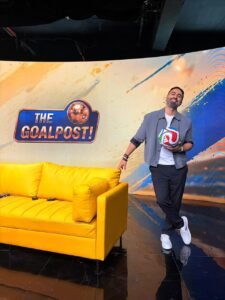
 Since 2018, I’ve hosted the Olympic Games, including Tokyo, the Asian Games, the UEFA Champions League final, the FA Cup, badminton, hockey, tennis and the Tata Mumbai Marathon. I love sports, and I’m always happy to add a new sport to my repertoire.
Every new sport is a fresh challenge. I read the rule book, learn how the scoring works and get to know the athletes, so I can ask the right questions and bring out the best in the experts beside me. Once, India won a medal in lawn bowls, a sport most of us had never watched, and I got to present it. Moments like that remind me why I love this job: there’s always something new to learn, and always a new audience to share it with.
Presenting the FIFA World Cup 2026
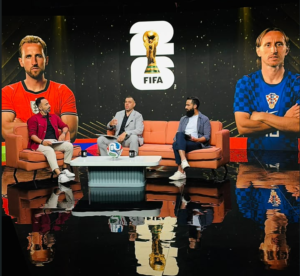
In 2026, I was back on football’s biggest stage, presenting the FIFA World Cup for Zee. The rights came in late, and the team built the studio, assembled the panel and went live in less than a month. People watching from outside won’t see the hiccups, because the team solved them before they ever reached the screen. What they achieved was nothing short of magic.
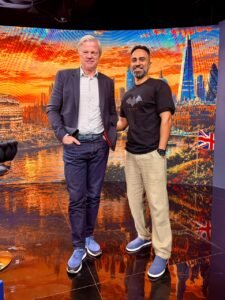
I still get that fan feeling. I can message Sunil bhai and he replies – that’s still a very big deal to me. During the tournament, I sat beside Paul Masefield, whose analysis I watched on TV some 20 years ago, and filmed a video with him. Later, watching it back, I thought, “Wait – I’m sitting next to him.” I told him the next day I couldn’t believe it.
What I Tell Young Anchors
If this is your dream, here’s what I’ve learned:
- Patience and hard work come first. Hardly anyone is handed a tournament on a plate. You will face rejection, and you must keep pushing.
- You don’t need to know the sport inside out. You need to ask the right question and draw out your guest.
- Presence of mind is everything. In live television, anything can happen, and you must be ready for it.
If I had to describe my journey in one word, it would be blessed. People like the phrase “self-made”, but nobody does anything alone. My parents encouraged me in studies and in sport. People like Siddharth opened doors. And somehow, the universe arranged for me to be in a TV room at a Diwali party watching El Clásico at exactly the right moment.
So, to every young person chasing this: heartbreaks will come, and things that are almost done will fall apart. If you believe you, have it in you, keep working. And never forget the people who were there for you.
About Arpit Sharma
Arpit Sharma is a Mumbai-based sports presenter, actor and emcee. A former IT engineer, he moved into theatre and commercials in 2008 and began his sports broadcasting career in 2016. He has presented the FA Cup final, the UEFA Champions League final, the Olympic Games, the Asian Games and two editions of the FIFA World Cup, in 2018 and 2026. He also hosts live events, bringing to the stage the same spontaneity and presence of mind he brings to the studio.
To know more about Arpit’s work as a presenter and emcee, visit: www.thearpitsharma.in
