


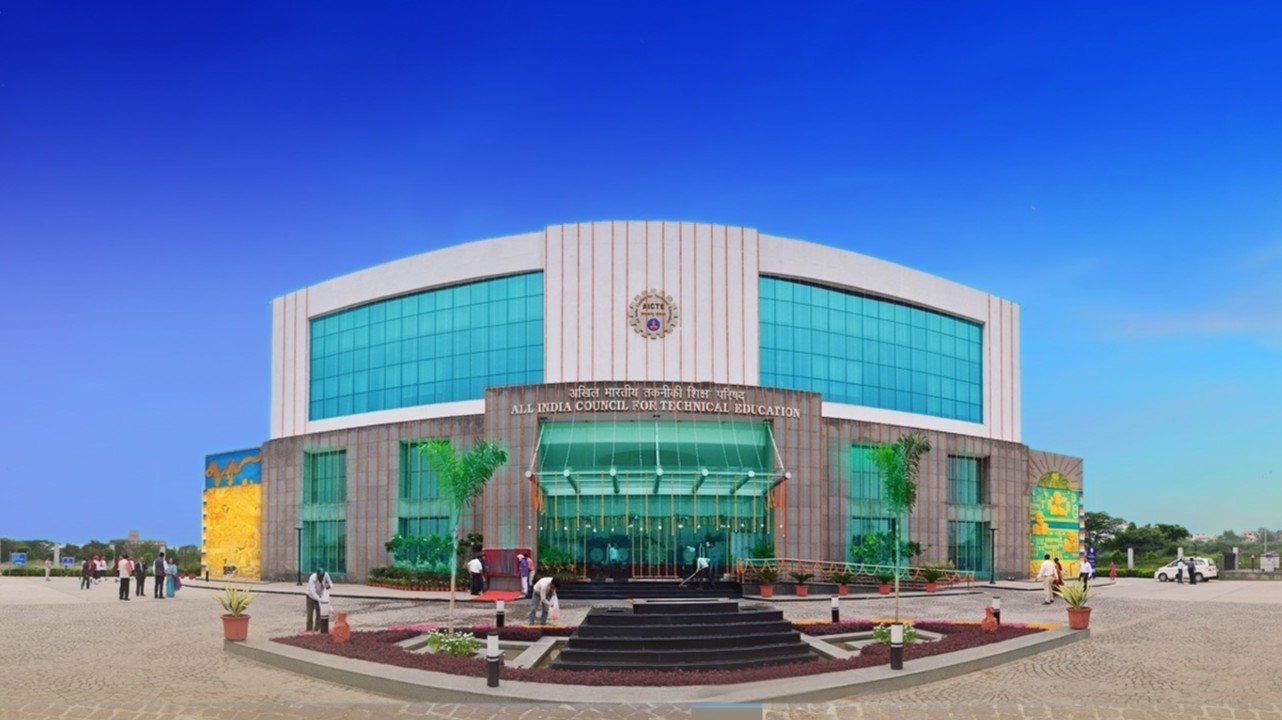
The All India Council for Technical Education (AICTE) has announced four schemes for the academic year 2026-27, with a focus on improving the quality of technical education, upgrading institutional infrastructure and encouraging innovation and research across India.
The initiatives aim to provide technical education institutions with better opportunities to strengthen their academic facilities, promote practical learning and improve their overall institutional capabilities. The four schemes were launched by AICTE Chairman Professor Yogesh Singh under the council’s Institutional Development Cell (IDC), in the presence of Member Secretary Professor Shyama Rath.
The newly announced schemes include IDEA Lab, Modernisation and Re-structuring for Outcome Based System (MODROBS), Margdarshan and Grant for Organising Conference (GOC).
Through these initiatives, AICTE aims to encourage wider participation from technical institutions, including colleges located in different districts, and create better opportunities for academic development beyond established educational centres.
Four AICTE Schemes for 2026-27: Check the Details
Each of the four schemes has a different objective, covering practical education, infrastructure development, institutional mentoring and academic collaboration.
- IDEA Lab Scheme: Encouraging Innovation and Practical Learning
The IDEA Lab scheme aims to develop a culture of innovation and hands-on learning among students. It focuses on helping students move beyond traditional classroom teaching and apply their theoretical knowledge to practical situations.
Under this initiative, students will get opportunities to experiment with ideas, develop prototypes and work on solutions to real-world challenges. The scheme also promotes the practical application of Science, Technology, Engineering and Mathematics (STEM) concepts.
The main objective is to encourage creative thinking, problem-solving abilities and learning through practical experience.
- MODROBS Scheme: Upgrading Laboratories and Infrastructure
The MODROBS scheme focuses on improving the existing infrastructure of technical education institutions. It aims to support the modernisation of laboratories, workshops and computing facilities.
With better infrastructure and updated equipment, institutions can provide students with improved practical training and create a more suitable environment for teaching, research and technical activities.
The initiative is particularly relevant as technical education continues to evolve with advancements in technology and changing industry requirements.
- Margdarshan Scheme: Strengthening Colleges Through Mentorship
The Margdarshan scheme focuses on improving the academic standards and institutional performance of technical colleges through guidance and mentorship.
Under this initiative, established and experienced institutions, including centrally funded institutions, will support other colleges by sharing academic expertise, resources and best practices.
The objective is to help participating institutions improve their teaching methods, academic processes and overall performance. Such collaboration can also support institutions in working towards better accreditation and ranking outcomes.
- Grant for Organising Conference (GOC): Promoting Research and Knowledge Sharing
The Grant for Organising Conference (GOC) scheme aims to encourage academic interaction and research-related activities by supporting institutions in organising national and international conferences.
These conferences can bring together academicians, researchers, faculty members and subject experts to discuss new developments, present research findings and exchange knowledge across different fields.
The initiative is expected to create more opportunities for academic collaboration and encourage research-oriented activities within technical education institutions.
AICTE Focuses on Innovation and Quality in Technical Education
The launch of these four schemes reflects AICTE’s continued efforts to strengthen India’s technical education ecosystem. By focusing on practical learning, modern infrastructure, academic mentorship and research activities, the council aims to address some of the key requirements of technical institutions.
AICTE Chairman Professor Yogesh Singh highlighted the importance of developing a research-oriented and innovation-driven culture in educational institutions. He also emphasized the need to make classroom teaching more interactive and encourage students to convert their ideas into practical solutions.
He further highlighted the growing role of emerging technologies, including Artificial Intelligence (AI), in improving teaching and learning methods.
AICTE Member Secretary Professor Shyama Rath also encouraged institutions to make use of these opportunities and strengthen their academic and institutional capabilities.
Application Details and Eligibility
Technical education institutions interested in these initiatives should refer to the respective AICTE scheme guidelines for detailed information about eligibility criteria, financial assistance, application procedures and other conditions.
As of November 2, 2026, the specific funding allocations, application deadlines and institution-wise eligibility details have not been clearly specified in the initial announcement. Institutions should therefore check the official AICTE website for the latest guidelines and application updates.
What These Four Schemes Mean for Technical Education
The four initiatives cover important areas that directly influence the quality of technical education in India. Better laboratory facilities can improve practical training, IDEA Labs can encourage innovation among students, Margdarshan can help institutions benefit from experienced academic guidance, while conference grants can strengthen research and knowledge exchange.
If implemented effectively, these schemes could help technical institutions improve their academic environment and prepare students with stronger practical and professional skills.
The success of these initiatives will ultimately depend on institutional participation, effective implementation and the opportunities made available to eligible colleges during the 2026-27 academic year.