


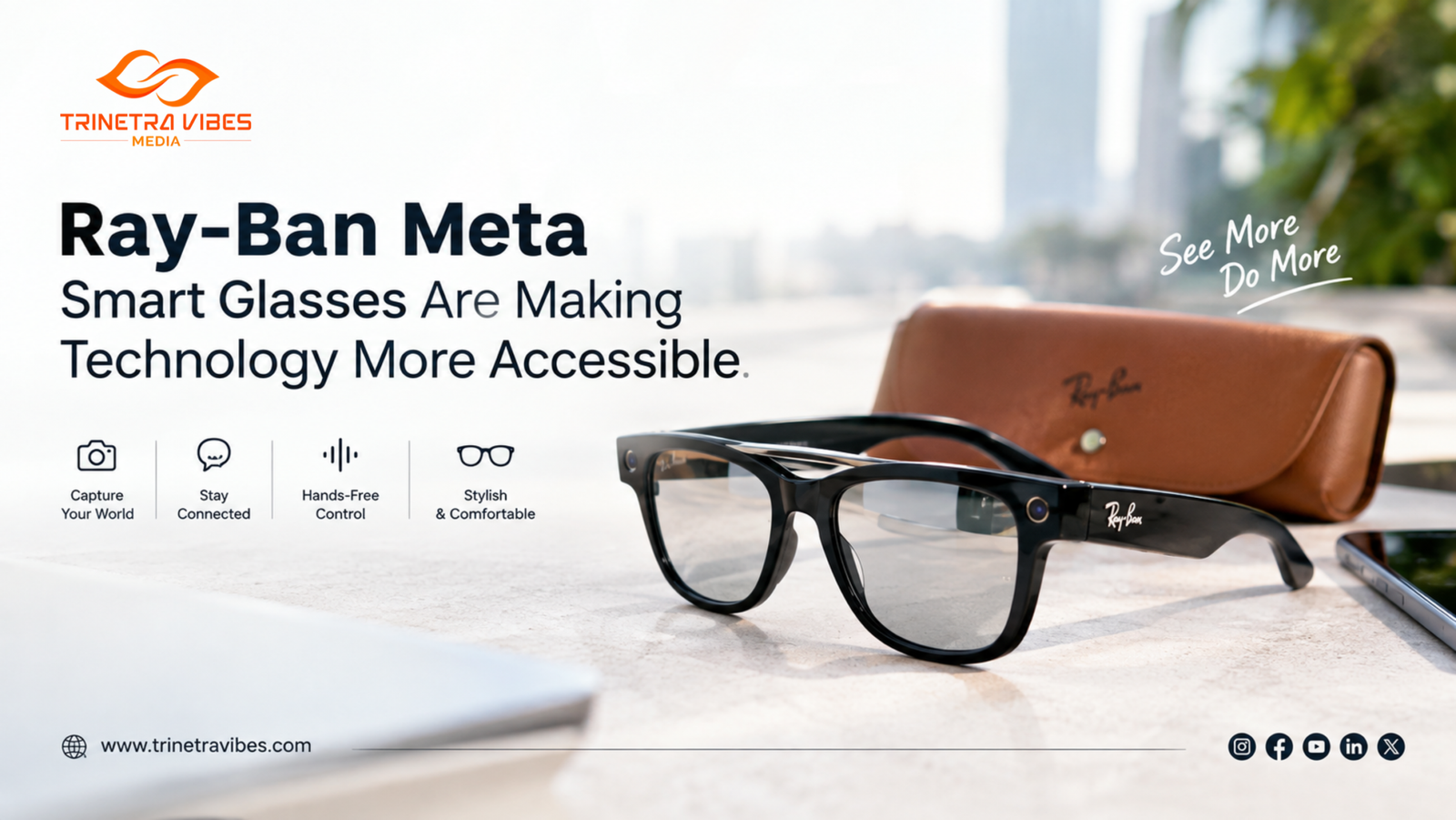
Technology is becoming less about screens and more about experiences, and Ray-Ban Meta Smart Glasses are a clear example of that shift. By combining the familiar look of everyday eyewear with smart features, the glasses are bringing technology closer to the way people naturally communicate, capture moments and access information.
Smart glasses are not a completely new idea, but the latest generation of wearable technology is making the concept more practical for everyday users. Developed through the collaboration between Ray-Ban and Meta, the smart glasses combine the style of traditional eyewear with features such as cameras, open-ear audio, voice interaction and connectivity with smartphones.
Technology Without Constantly Looking at a Screen
One of the biggest changes brought by smart glasses is the way users interact with technology.
Instead of reaching for a smartphone every time they want to take a photo, listen to something or perform a simple task, users can interact with the glasses through voice commands and built-in controls.
This hands-free approach can be useful while travelling, walking, working or simply enjoying an experience. It also reflects a wider movement in the technology industry towards more natural and less screen-dependent interactions.
A Camera You Can Wear
The built-in camera is one of the most noticeable features of Ray-Ban Meta Smart Glasses.
Users can capture photos and videos from their own point of view without taking out a phone. This can make documenting travel, events, outdoor activities and everyday moments much more convenient.
For content creators, the first-person perspective can also provide a different way to produce social media content. Instead of setting up a traditional camera or holding a smartphone, creators can record moments as they happen.
Voice Interaction Is Becoming More Practical
Another important part of the experience is voice-based interaction.
With Meta’s AI capabilities, users can interact with the glasses using their voice for supported tasks. This points towards a future where artificial intelligence is not limited to computers and smartphones but becomes part of everyday objects.
For many people, speaking to a device can feel more natural than navigating through multiple menus or applications, particularly when their hands are occupied.
Smart Audio Without Blocking the World
The glasses also integrate open-ear audio, allowing users to listen to music, podcasts, calls and other audio while remaining aware of their surroundings.
This is particularly useful for people who prefer not to wear traditional headphones throughout the day. The glasses maintain the appearance of regular eyewear while adding another layer of digital functionality.
Why Accessibility Matters
The importance of smart glasses goes beyond convenience.
Technology becomes more accessible when people can use it without having to constantly learn complicated interfaces. Wearable devices that respond to simple voice commands can potentially make digital services easier to access for people who find conventional smartphone interactions difficult.
Technology is still developing, but the direction is significant. Instead of asking users to adapt completely to technology, companies are increasingly trying to make technology fit more naturally into everyday life.
Privacy Remains an Important Conversation
As smart glasses become more common, privacy is also becoming an important part of the discussion.
Because the glasses include cameras and microphones, users need to remain aware of their surroundings and respect the privacy of people nearby. Responsible use is particularly important in workplaces, public spaces and private environments.
The success of wearable technology will depend not only on what these devices can do, but also on how responsibly people use them.
The Future of Wearable Technology
Ray-Ban Meta Smart Glasses represent a broader trend in consumer technology: moving digital experiences away from traditional screens and into products people already use every day.
Smart glasses may not replace smartphones anytime soon. However, they can complement existing devices by providing quick access to photography, audio, communication and AI-powered features without requiring users to constantly look down at a screen.
As artificial intelligence, cameras, voice assistants and wearable devices continue to improve, products like these could become an increasingly familiar part of everyday life.
Final Word
Ray-Ban Meta Smart Glasses show how technology can become more accessible when it is integrated into something as familiar as a pair of glasses. The combination of everyday design, hands-free controls, camera capabilities, audio and AI features makes them an interesting step in the evolution of wearable technology.
The bigger story, however, is not just about one pair of smart glasses. It is about how technology is gradually moving from devices we carry to technology we can naturally wear and use throughout the day.