


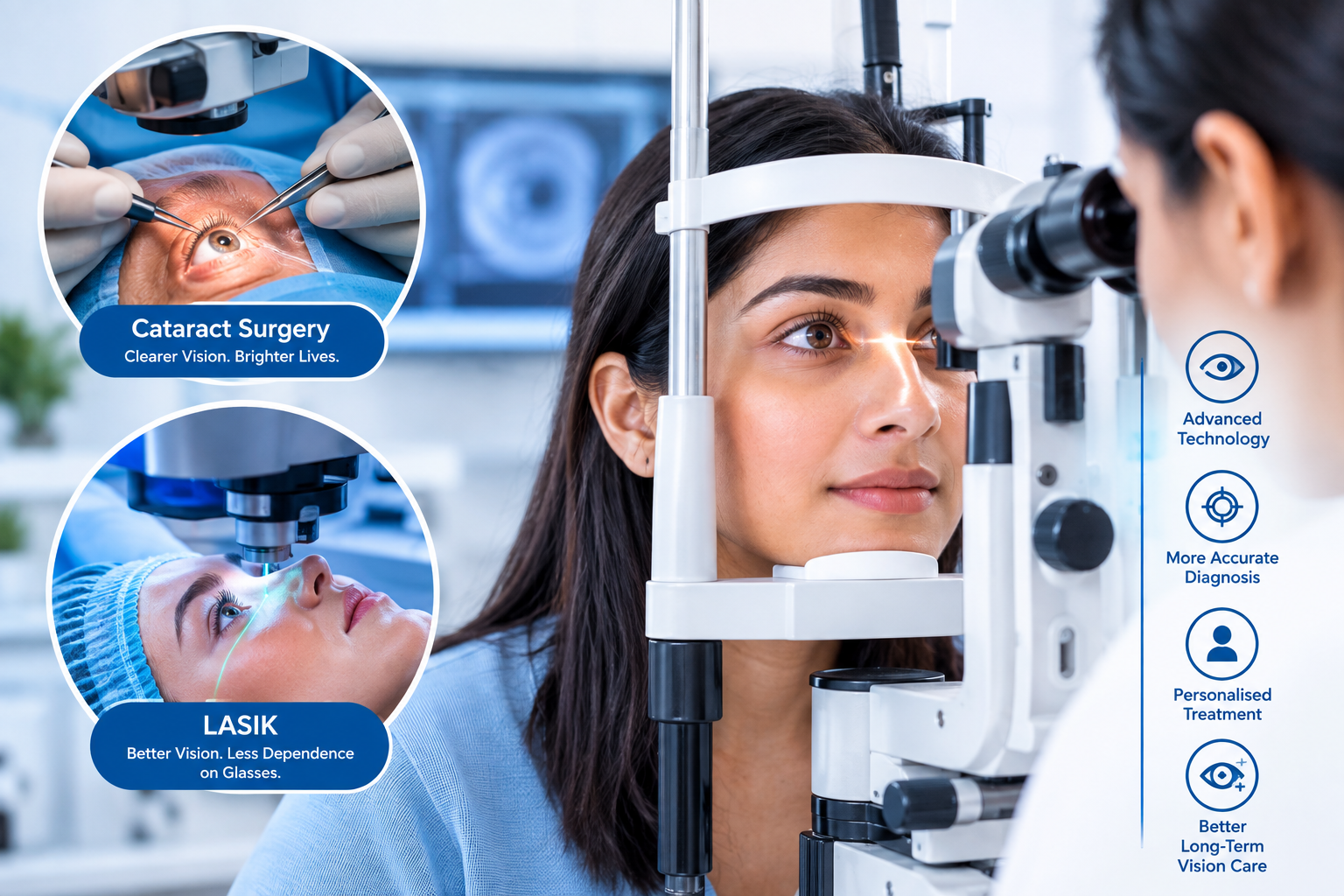
New Delhi: Eye care has changed significantly in recent years, with advances in surgery, laser technology and diagnostic tools making treatment more precise and accessible for patients. From cataract surgery to LASIK and other vision-correction procedures, modern ophthalmology is helping people manage common eye problems and improve their quality of life.
Cataract surgery remains one of the most widely performed eye procedures. A cataract develops when the natural lens of the eye becomes cloudy, often causing blurred vision, difficulty seeing at night and increased sensitivity to light. Modern cataract surgery generally involves removing the cloudy lens and replacing it with an artificial intraocular lens (IOL).
Technology has also changed the experience of LASIK, a procedure commonly used to correct refractive errors such as shortsightedness, long-sightedness and astigmatism. Advanced diagnostic systems can help doctors assess the shape and thickness of the cornea before deciding whether a patient is suitable for laser vision correction.
Beyond LASIK, newer techniques and specialized lenses are giving patients more treatment options. Depending on age, eye health and the type of vision problem, doctors may recommend different procedures or lens technologies rather than using the same approach for everyone.
Another important development is the growing use of digital imaging and computer-assisted diagnostics. These tools can help eye specialists detect and monitor conditions such as glaucoma, retinal disorders and other eye diseases at earlier stages.
However, experts emphasis that advanced technology does not mean every procedure is suitable for every person. A detailed eye examination and consultation with a qualified ophthalmologist are important before choosing surgery or laser vision correction.
As eye-care technology continues to develop, the focus is increasingly moving toward earlier diagnosis, personalized treatment and better long-term vision care. For patients, this means more options—but also the need to make treatment decisions based on professional medical advice and individual eye health.