

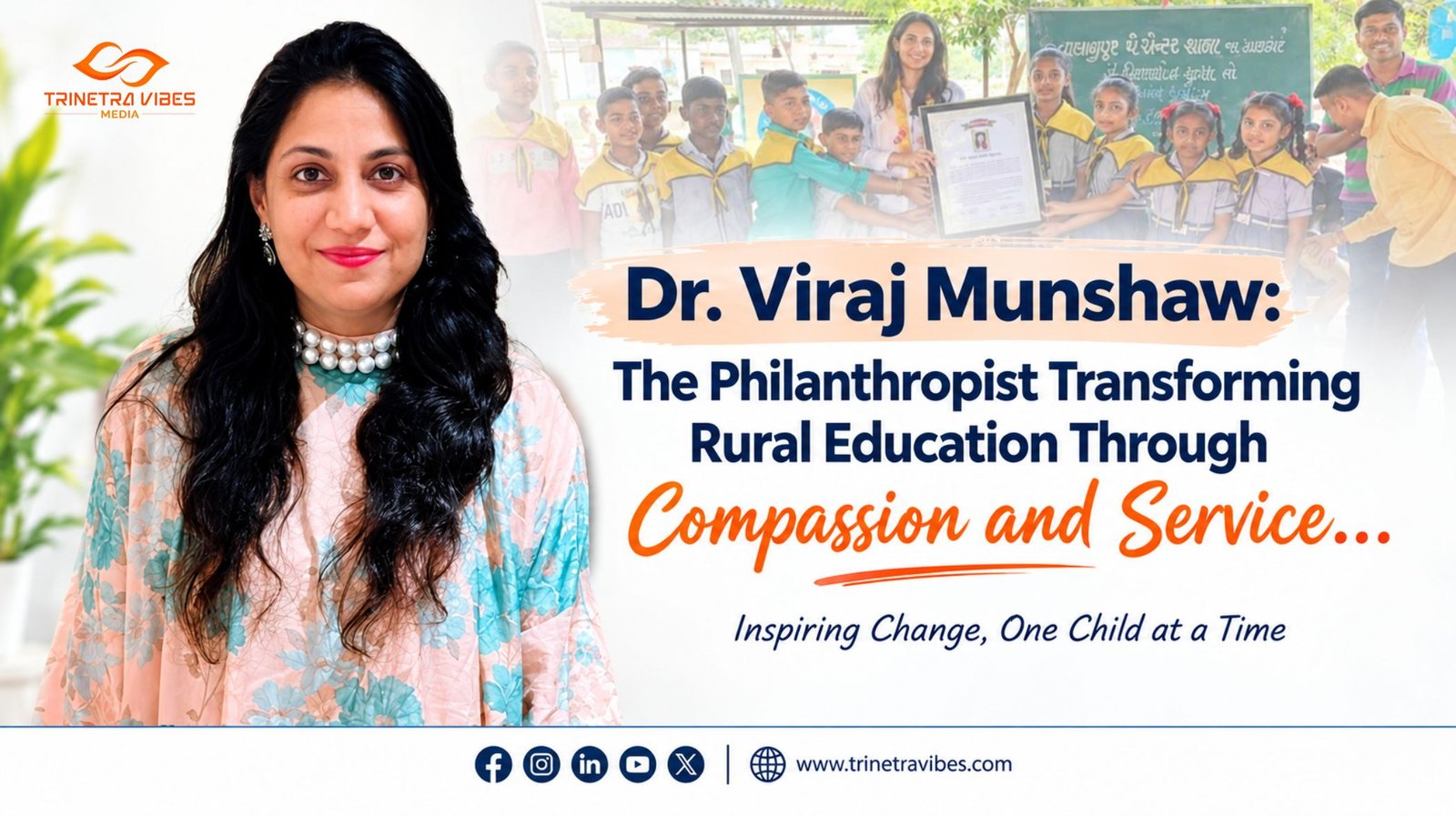
From starting a Sunday school for underprivileged children to supporting rural schools with resources worth approximately ₹2 crore, Dr. Viraj Munshaw’s philanthropic journey reflects a simple belief: meaningful change begins when we recognise a need and take the initiative to address it.
In a world where success is often measured by professional achievements and material milestones, some individuals choose to measure their lives by the difference they make in the lives of others. Dr. Viraj Munshaw is among those who believe that education, compassion and selfless service can create lasting change.
Holding a Ph.D. in English Literature, a Sangeet Visharad qualification in classical vocal music, and a certification in nutrition, Dr. Munshaw has pursued diverse academic interests. Yet, one of the most meaningful chapters of her life has been her commitment to supporting underprivileged children, strengthening rural schools and extending a helping hand to communities in need.
Her philanthropic journey, which began in June 2016, has grown from a small educational initiative at her ancestral family ashram into a broader effort to improve learning environments and provide essential resources to schools across several parts of Gujarat.
For Dr. Munshaw, giving back is not simply an occasional act of generosity. It is a responsibility shaped by family values, personal conviction and the belief that even a single initiative can make a lasting difference.
A Family Legacy Rooted in Service and Compassion
For Dr. Viraj Munshaw, the spirit of philanthropy did not begin with a single initiative. It was a value she grew up witnessing through the lives and contributions of her family members.
An important source of inspiration has been the Sheth Chandulal Madhavlal Public Charity Trust at Utkanteshwar, also known as Utadiya Mahadev. The family ashram was established in the early 1950s by her great-grandfather, Sheth Shri Chandulal, who, according to Dr. Munshaw’s account, gave up his directorships in 20 textile mills to establish a Vanprasth Ashram dedicated to caring for the elderly and serving society.
Sheth Shri Chandulal, her maternal grandmother’s father, envisioned a place where service and compassion would take precedence over personal comfort. The ashram continues to represent the values of sacrifice, community welfare and responsibility that have influenced generations of the family.
Dr. Munshaw also draws inspiration from her paternal grandfather, Shri Chinubhai Munshaw, promoter of Vivekanand Mills and founder of Shreyas Samaj in Ahmedabad, a charitable community serving Vaishnavs.
Her paternal grandmother, Shrimati Tarumati Ben Nagri-Munshaw, and her maternal grandparents, Shri Dinesh Chandra Patel and Shrimati Kalavati Patel, have also been important influences in her life. Shri Dinesh Chandra Patel, owner and promoter of Sintex Limited, established a charitable school in Kalol Taluka, further reinforcing the family’s connection with education and social welfare.
Growing up with these examples helped shape Dr. Munshaw’s understanding of philanthropy. She came to see giving back not merely as a generous gesture, but as a way of life – one that calls for consistency, empathy and a willingness to act when others need support.
The Beginning: A Sunday School with a Bigger Purpose
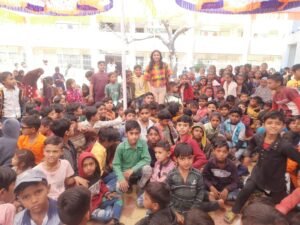 In June 2016, Dr. Munshaw took her first major step into organised community service by starting a Sunday school at her family’s ancestral ashram in Utkanteshwar.
The initiative focused on teaching English and basic computer skills to children from underprivileged backgrounds. The idea was straightforward: providing children with opportunities to learn skills that could help them in their education and future lives.
What began as a modest effort was rooted in a larger belief that access to education should not be limited by a child’s financial circumstances or place of residence.
The Sunday school eventually had to close during the COVID-19 pandemic. However, the disruption did not bring Dr. Munshaw’s commitment to education to an end. Instead, it opened the door to a different way of serving the same community.
Around this time, principals of government schools in and around Utkanteshwar began approaching her for support. Their requests introduced her to the everyday challenges faced by rural educational institutions from shortages of learning materials to the need for better drinking-water facilities and more engaging classroom environments.
Rather than relying only on requests or assumptions, Dr. Munshaw began visiting schools personally, meeting principals, understanding their concerns and identifying where her efforts could make a practical difference.
This marked an important turning point in her journey: from teaching children directly to helping improve the environment in which hundreds of children learn.
Supporting Rural Schools, One Need at a Time
Dr. Munshaw’s approach to philanthropy is guided by a simple principle: understand what is missing and do what is possible to fill the gap.
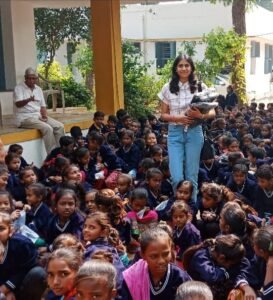 Over the years, her initiatives have extended to approximately 15–20 schools across Utkanteshwar, Kapadvanj and Kadi, according to the details she has shared. The support has focused on the practical requirements of schools and their students.
The contributions included books, sweaters, compass boxes and green boards, along with facilities such as water coolers, RO water purification plants, smart classrooms, gardens and children’s play areas.
Each of these resources addresses a different aspect of a child’s school experience. Books and learning materials support classroom education, while access to safe drinking water and improved facilities can make the school environment more comfortable. Smart classroom facilities can also create opportunities for more engaging and technology-assisted learning.
For Dr. Munshaw, the objective is not to provide the same solution for every school. It is to understand that each institution has its own circumstances and priorities, and that meaningful support begins by listening to the people who know those needs best.
Her work has also expanded to Thasra, her native village, where she supports approximately 10–20 schools in a similar manner.
Together, these efforts reflect a sustained commitment to strengthening rural education through practical, need-based assistance.
A Contribution of Approximately ₹2 Crore and the People Behind It
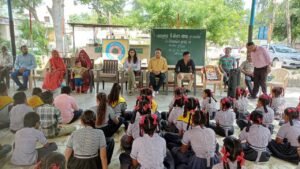 According to Dr. Munshaw, the cumulative value of the resources and materials contributed through her educational initiatives is approximately ₹2 crore.
The figure represents more than the value of books, equipment or infrastructure. Behind it are numerous school visits, conversations with principals, assessments of local needs and efforts to arrange the resources required to address them.
Not every requirement can be fulfilled independently. When a school’s needs go beyond what she can personally provide, Dr. Munshaw reaches out to make donor friends and well-wishers who may be willing to contribute.
Their support has become an important part of the journey, allowing individual requests to develop into initiatives that benefit wider school communities.
Dr. Munshaw expresses deep gratitude to those who have placed their trust in her vision. Their willingness to contribute has helped her extend her reach and respond to needs that might otherwise have remained unaddressed.
Their collaborative approach also highlights an important aspect of philanthropy: meaningful change does not always depend on one person having all the resources. Sometimes, it begins with someone willing to identify a problem, bring people together and work towards a solution.
Extending Compassion Beyond the Classroom
While education remains central to Dr. Munshaw’s philanthropic efforts, her commitment to community welfare extends beyond schools.
 Alongside her mother, Jigisha Munshaw, her maternal aunt, Swati Patel, and family friend Rakesh Bhai Patel, she is involved in a weekly food initiative in Ahmedabad that supports approximately 100 municipal sanitation workers and underprivileged children.
A particular focus of the initiative is sanitation workers who earn less than ₹5,000 per month. Their work plays an essential role in maintaining the city’s cleanliness and public spaces, yet some continue to face significant financial challenges.
Through this initiative, the group seeks to provide food and a gesture of care to people whose contributions to everyday urban life are often taken for granted.
For Dr. Munshaw and her family, the effort is a reminder that service can take many forms. It may mean helping a child access better learning resources, improving facilities at a rural school or sharing a meal with someone facing financial hardship.
At the heart of each effort is the same principle: recognise people’s needs and respond with dignity and compassion.
Using Social Media to Connect Good Intentions with Action
In today’s connected world, social media can play a meaningful role in bringing attention to causes that might otherwise remain local or overlooked.
Dr. Munshaw uses social media to share information about her philanthropic work, highlight the needs of schools and communities, and connect with people who may be able to contribute.
For her, visibility is not the primary objective. Rather, sharing these efforts can help more people understand the challenges faced by rural schools, encourage others to participate in social initiatives and build connections with potential donors.
When used thoughtfully, digital platforms can help bridge the gap between a community in need and someone willing to help. They can also demonstrate how small, practical contributions can become part of a larger collective effort.
By sharing her experiences, Dr. Munshaw hopes to encourage more people to look beyond their immediate surroundings and consider how their time, skills or resources could benefit others.
The Challenges Behind Philanthropic Work
 The impact of community service is often visible in the resources delivered and the people supported. Less visible, however, are the practical difficulties involved in sustaining such work.
For Dr. Munshaw, reaching rural schools can be challenging because of transportation limitations and difficult commuting conditions. These obstacles can make regular visits, coordination and the delivery of essential materials more complicated.
Funding is another challenge. As an independent philanthropist working without a registered charitable trust or organisation, she sometimes finds it difficult to secure larger donations.
Some prospective donors prefer to contribute through registered charitable organisations that can provide an 80G tax-exemption certificate, allowing eligible donors to claim tax benefits under applicable rules. Since Dr. Munshaw does not currently operate through such a registered organisation, she cannot personally issue this certificate, which may limit support from donors who require it.
Despite these constraints, she continues to rely on personal initiative, relationships with well-wishers and a willingness to work through the needs presented by individual schools.
Her experience highlights a wider reality of grassroots philanthropy: good intentions matter, but sustained impact also requires resources, coordination, accessibility and the trust of those who contribute.
The Vision: Making Quality Education More Accessible
 Looking ahead, Dr. Munshaw wants to expand her efforts to reach more schools and villages where educational resources and essential facilities remain limited.
Her vision places particular emphasis on quality English education in rural areas and on creating learning environments in which children can learn with greater confidence, curiosity and enthusiasm.
She also wants to explore ways of making education more engaging through innovative teaching methods and technology, helping children experience learning as something meaningful and enjoyable rather than simply a classroom requirement.
The larger mission is to identify schools receiving limited or inadequate support, understand their specific needs and extend assistance beyond the areas their initiatives currently reach.
For Dr. Munshaw, progress is not only about reaching more institutions. It is also about ensuring that the support provided responds to real needs and creates opportunities that children can benefit from overtime.
A Journey That Goes Beyond Giving
Dr. Viraj Munshaw’s journey is a reminder that philanthropy does not always begin with a large organisation, a formal campaign or a grand announcement. Sometimes, it starts with a simple decision to teach a group of children on a Sunday and grows through years of listening, learning and responding to the needs of others.
From the ancestral ashram at Utkanteshwar to government schools across several parts of Gujarat, and from educational resources to weekly food support in Ahmedabad, her work reflects a continuing effort to turn compassion into practical action.
The approximately ₹2 crore in resources she says have been contributed through her initiatives is an important milestone. Yet the deeper value of her work lies in the opportunities it seeks to create better learning environments, access to essential facilities and a stronger sense of support for communities that need it.
Her journey also reflects the importance of collective effort. Family values may provide inspiration, but it is the participation of donors, well-wishers and local school communities that helps initiatives grow.
As Dr. Munshaw looks towards reaching more villages and improving access to quality education, her guiding belief remains clear: meaningful change begins when we recognise a need and take responsibility for doing something about it.
And sometimes, the greatest legacy is not what we leave behind for ourselves, but what we help make possible for others.