

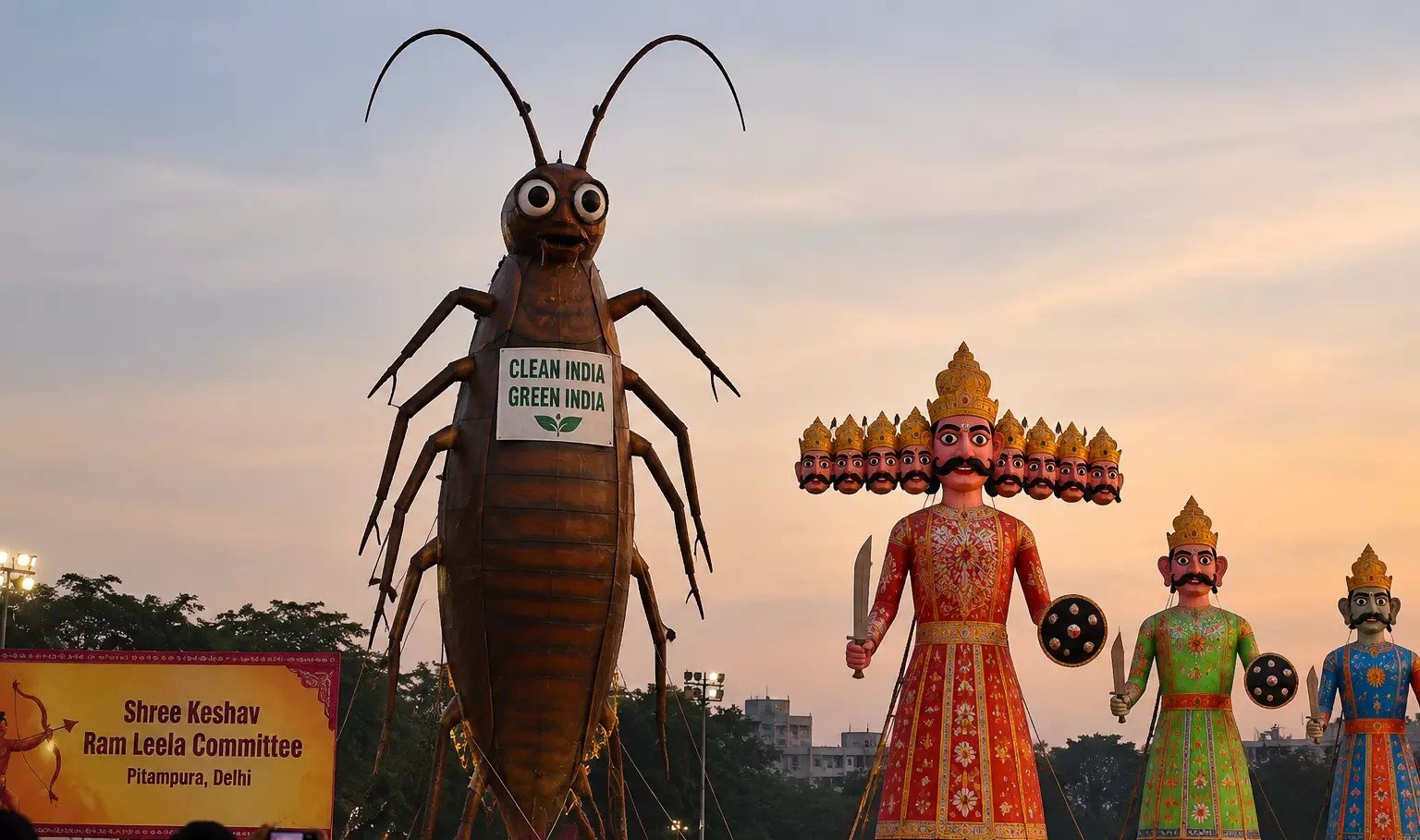
Dussehra celebrations in Delhi are set to feature an unusual addition this year-a 30-foot-tall cockroach effigy that will be burnt alongside the traditional effigies of Ravana, Kumbhakarna and Meghnad. The initiative by the Shri Keshav Ramlila Committee in Pitampura aims to draw attention to cleanliness and the need to eliminate unhygienic conditions from homes, neighborhoods and society.
Why Is Delhi Burning a Giant Cockroach Effigy This Dussehra?
According to the organisers, the cockroach represents dirt and filth. The committee says the initiative is intended to spread awareness about cleanliness and support the message of the Swachh Bharat and Swachh Delhi campaigns.
Committee president Ashok Goel Devaraha explained that Dussehra represents the victory of good over evil. He said the committee has previously used additional effigies to highlight social problems, including Naxalism and terrorism. This year, the cockroach has been chosen as a symbol of the need to remove filth from people’s homes, surroundings and society.
The 30-foot structure is planned for the committee’s grounds in Pitampura, near Netaji Subhash Place (NSP), in northwest Delhi. The cockroach will also feature among the demons in Ravana’s army during the Ramlila performance.
A Different Message Alongside the Traditional Ravana Dahan
Ravana Dahan is a major part of Dussehra celebrations across India and traditionally represents the victory of righteousness over evil. By introducing the cockroach effigy, the organisers want to extend this message to everyday civic responsibilities, particularly maintaining clean homes and public spaces.
The unusual plan has also attracted public attention and debate, with some questioning whether a contemporary social symbol belongs in a traditional religious celebration. The organisers, however, have maintained that the initiative focuses on cleanliness rather than politics.
Why the Initiative Has Drawn Attention
The announcement comes amid protests by the Cockroach Janata Party (CJP) in Delhi, prompting speculation about the timing of the effigy burning. However, the Ramlila committee has denied that its decision is politically motivated and has said the cockroach represents filth and unhygienic conditions.
As Delhi prepares for Dussehra 2026, the planned effigy adds a contemporary civic message to the festival’s traditional theme. Whether viewed as a cleanliness-awareness initiative or a controversial addition to the celebrations, the giant cockroach has become an unusual talking point ahead of Vijayadashami.
Conclusion: The planned burning of the 30-foot cockroach effigy in Pitampura highlights how Dussehra celebrations can also be used to draw attention to present-day social issues. The committee’s stated message is simple: the fight against evil should also include a collective effort to keep our homes, neighborhoods and surroundings clean.