

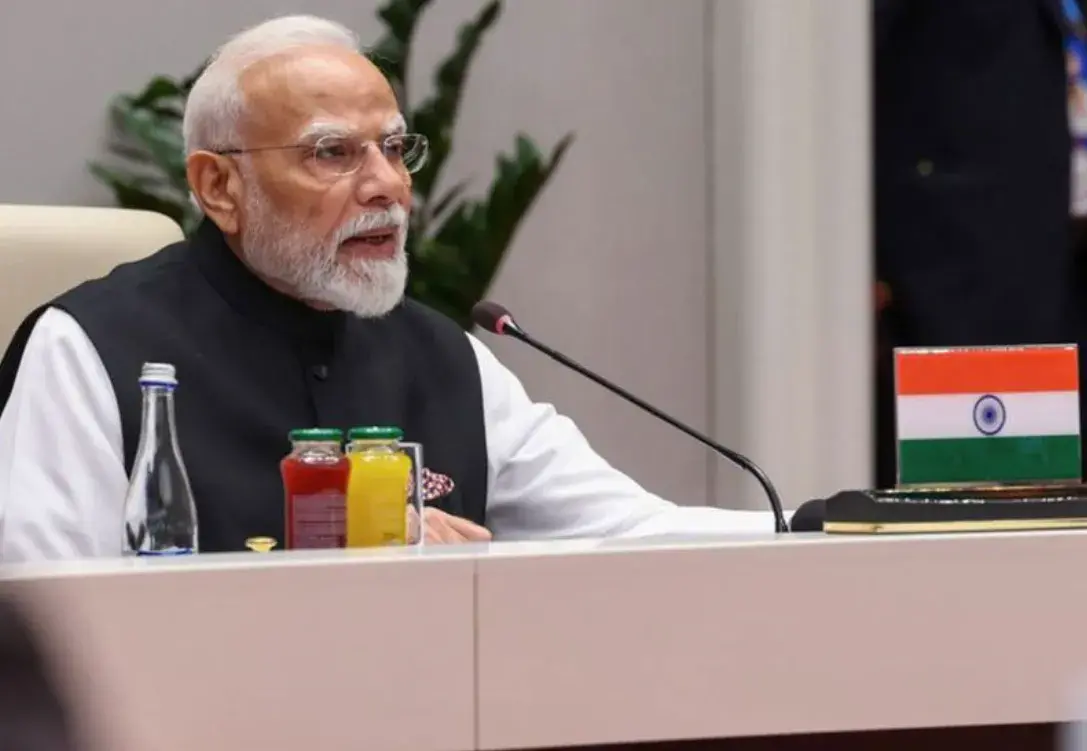
Prime Minister Narendra Modi has stressed the importance of dialogue, cooperation and collective efforts as India prepares to host the 18th BRICS Summit in New Delhi on September 12 and 13, 2026.
India is chairing BRICS this year for the fourth time since the grouping was established. The upcoming summit comes at a time when the global community is dealing with geopolitical tensions, economic uncertainty, technological changes and several other challenges that require greater coordination among countries.
The Indian government has positioned its BRICS 2026 chairship around the theme “Building for Resilience, Innovation, Cooperation and Sustainability.” The focus is on strengthening cooperation among member countries while keeping development, sustainability and the interests of the Global South at the center of discussions.
PM Modi’s Focus on Dialogue and Cooperation
PM Modi has repeatedly highlighted the importance of dialogue and diplomacy in dealing with international challenges. During his recent interaction with Russian President Vladimir Putin, the Prime Minister reiterated that dialogue and diplomacy are the way forward in resolving conflicts. The two leaders also discussed India’s BRICS chairship and preparations for the upcoming summit.
The message is significant as BRICS has expanded considerably in recent years and now includes 11 member countries – Brazil, China, Egypt, Ethiopia, India, Indonesia, Iran, Russia, Saudi Arabia, South Africa and the United Arab Emirates.
With the grouping representing a substantial share of the world’s population and economy, India sees BRICS as an important platform for discussions on global governance, economic cooperation and the priorities of developing countries.
What India Wants to Achieve Through BRICS 2026
India’s approach during its 2026 chairship has been focused on practical cooperation rather than only high-level discussions. According to the government, more than 350 meetings and high-level engagements have been organized across 25 cities during India’s chairship.
Several ministerial meetings have already produced initiatives covering areas such as agriculture, labour, education, science and technology, trade, communications and digital cooperation.
The government has also highlighted the need to strengthen the voice of the Global South in international institutions and encourage cooperation in areas that can directly benefit people and economies.
Trade, Technology and Development on the Agenda
Economic cooperation is expected to remain an important part of the BRICS discussions. At the BRICS Trade Ministers’ Meeting held in Jaipur in August, member countries discussed expanding trade, strengthening global value chains and improving access to trade finance for smaller businesses.
Technology and innovation have also emerged as key areas under India’s BRICS chairship. Earlier in August, BRICS science ministers adopted the Chennai Declaration, placing people-centred development, innovation, research cooperation and sustainable growth at the heart of science and technology cooperation.
Security cooperation is another area to receive attention. During a meeting with BRICS national security advisers in June, PM Modi highlighted terrorism, cybersecurity and emerging technologies as shared challenges that require greater cooperation between member countries.
Why the 2026 Summit Matters
The New Delhi summit comes at an important moment for BRICS. With its membership expanded and its role in global affairs growing, the grouping faces the challenge of finding common ground among countries with different economic interests and geopolitical positions.
For India, the summit offers an opportunity to push for greater cooperation while highlighting issues important to developing nations. The emphasis on resilience, innovation, sustainability and cooperation also reflects India’s attempt to give the grouping a more practical and development-focused agenda.
The two-day summit in New Delhi is therefore expected to attract considerable global attention. Beyond the formal meetings, the key question will be whether BRICS members can translate their discussions into concrete areas of cooperation.
As India prepares to welcome leaders of the expanded BRICS grouping, PM Modi’s emphasis on dialogue and cooperation underlines New Delhi’s broader message: countries must work together to address common challenges and build a more inclusive and sustainable global order.