

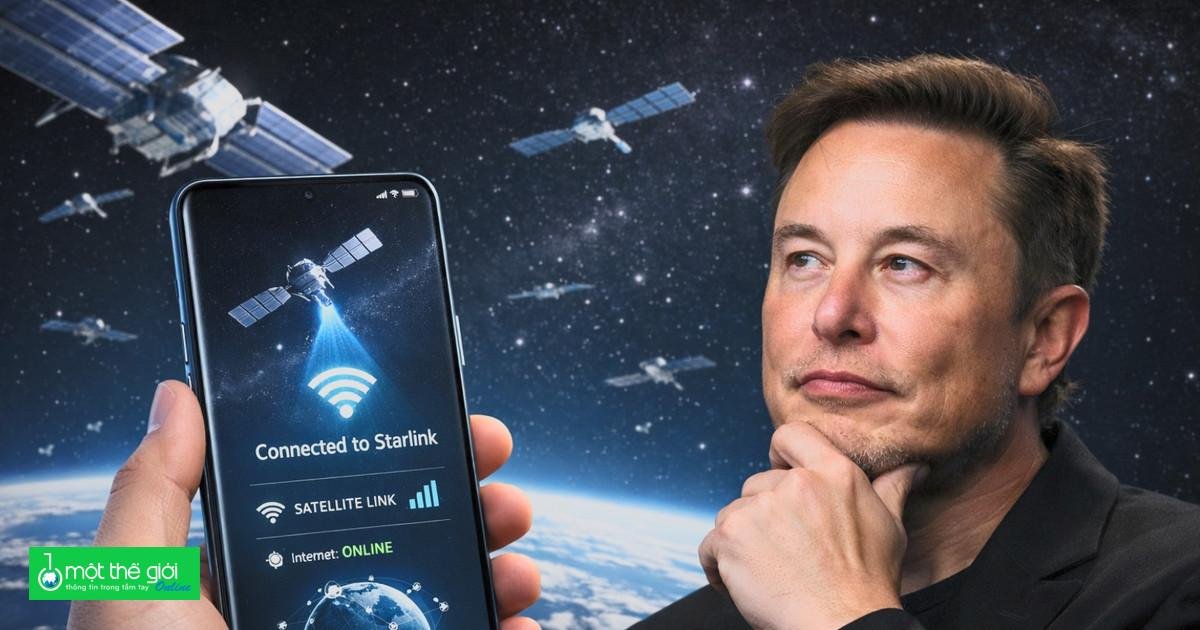
Elon Musk’s SpaceX is looking to expand Starlink beyond satellite internet and into the mobile communications market, but the company’s plans are facing criticism from T-Mobile. Peter Osvaldik, T-Mobile’s chief financial officer, has questioned whether Starlink’s proposed approach can compete directly with traditional wireless networks.
Speaking at Citi’s 2026 Global TMT Conference, Osvaldik said T-Mobile does not currently view Starlink Mobile as a significant competitive threat to its wireless business. He also criticised what he described as changes in SpaceX’s strategy for building a mobile network.
SpaceX Expands Starlink Into Mobile Connectivity
SpaceX has been developing Starlink Mobile as an extension of its satellite network. The company aims to use satellites to provide cellular connectivity, particularly in areas where traditional mobile networks have limited coverage.
SpaceX President Gwynne Shotwell has previously indicated that Starlink could compete for customers of major telecom operators by providing connectivity in locations where conventional networks face coverage challenges.
Starlink already operates a large satellite constellation, including direct-to-cell satellites designed to connect with compatible mobile phones.
T-Mobile Questions Starlink’s Approach
Osvaldik argued that satellite-based connectivity faces physical limitations, particularly in densely populated areas. Buildings, walls and other obstacles can affect the ability of signals from satellites to reach smartphones.
He said that increasing the number of satellites would not by itself solve all of these challenges. According to Osvaldik, the distance between satellites and devices creates limitations that terrestrial cellular networks do not face in the same way.
Starlink’s Ground Network Plan
SpaceX has also discussed using small cellular base stations, or femtocells, alongside its satellite network. These units could potentially be installed on buildings and other locations to provide additional mobile coverage.
Osvaldik questioned the scale of infrastructure that would be required for such an approach. He argued that deploying enough ground-based equipment to replicate the coverage of established cellular networks could become extremely large and difficult to implement.
Starlink and T-Mobile Already Have a Relationship
The criticism comes despite an existing relationship between the two companies. T-Mobile and SpaceX have previously worked together on satellite-to-cellular connectivity, with Starlink satellites being used to extend T-Mobile coverage beyond traditional cellular networks.
T-Mobile has described direct-to-cell technology as complementary to its terrestrial network rather than a replacement for conventional cellular infrastructure. In a recent earnings call, T-Mobile executives said satellite connectivity currently represents a very small portion of network usage and is viewed as an additional coverage option.
What Comes Next for Starlink Mobile?
SpaceX’s expansion into mobile connectivity could increase competition in the wireless industry, particularly in remote and underserved areas. However, questions remain about how satellite and ground-based technologies can be scaled to provide reliable service in densely populated markets.
For now, Starlink is continuing to develop its mobile strategy, while established operators such as T-Mobile are assessing how satellite connectivity could fit alongside existing cellular networks.